Monday, April 18, 2011

Miracles in Quran – Sex in Plants

 
i
Rate This
Quantcast

….And has sent down water from the sky. With it have We produced diverse pairs of plants.” (The Holy Qur’an 20:53)
…And fruit of every kind He made in pairs two and two.“(The Holy Qur’an 13:33)

During the time of the Prophet, biology was not a developed science and the system of reproduction of plants was not known. Differentiation of sex in plants was to be a later discovery. The concept of the production of diverse pairs of plants as stated in the Quran 1400 years ago is very meaningful.
Most species of plants exhibit features of sex, namely, the production of specialized sex cells or gametes and the fusion of these cells in pairs, called fertilization. In flowering plants, the gametes are produced within the flowers. In the female portion, the egg of the plant forms a bulge: this is the ovum with its small and round seeds. Sperm is produced within the pollen tubes and then is carried by wind or insects or other agents from the pollen-producing organs of the flower to the stigma of the pistil. Inside the pistil are ovules, within each of which a female sex cell (egg) is produced. The fertilized egg develops into the embryo of the seed, and the ovule eventually becomes the mature seed. The pollen grain with its tube and contents is the male gametophytes of a flowering plant, and the central tissue (embryo sac) of the ovule with its egg constitutes the female gametophytes of a flowering plant.
PERFECT HARMONY:
Plants are of almost infinite variety, their range stretching from the tiniest of plants to the gigantic Californian redwood (Mammoth tree) reaching a height of 90 meters. In the sexual reproduction of plants, male and female organs are differentiated. They have an extremely complex and perfect microscopic world. Thousands and thousands of female and male organs fit each other as if encoded. Had this harmony been a little bit less perfect, none of these plants could have perpetuated their species, since everything depended on these male and female reproductive organs. The least defect in any of them would mean the end of that particular species. These organs must exist in perfect condition within the same species of plant within the same time bracket. This impeccable order shows once again the perfection of the Creator’s design, which leaves no room whatsoever for coincidences. A complex code designed to unlock quadrillions of safes cannot possibly be the result of fortuitousness. The case of plants’ sexual reproduction is even more complicated, and the sexuality in plants and reproduction are but one of the many aspects of the creation of plants. Every plant in its impeccable form is an ornament of our world, a part of our ecological system, a miracle of creation.
Thanks to: http://www.quranmiracles.com
This entry was posted o

Hijab – Dr. Zakir Naik

 
i
3 Votes
Quantcast

Question: Why does Islam degrade women by keeping them behind the veil?
Answer: The status of women in Islam is often the target of attacks in the secular media. The ‘hijaab’ or the Islamic dress is cited by many as an example of the ‘subjugation’ of women under Islamic law. Before we analyze the reasoning behind the religiously mandated ‘hijaab’, let us first study the status of women in societies before the advent of Islam

1. In the past women were degraded and used as objects of lust

The following examples from history amply illustrate the fact that the status of women in earlier civilizations was very low to the extent that they were denied basic human dignity:
1. Babylonian Civilization:The women were degraded and were denied all rights under the Babylonian law. If a man murdered a woman, instead of him being punished, his wife was put to death.
2. Greek Civilization: Greek Civilization is considered the most glorious of all ancient civilizations. Under this very ‘glorious’ system, women were deprived of all rights and were looked down upon.
In Greek mythology, an ‘imaginary woman’ called ‘Pandora’ is the root cause of misfortune of human beings. The Greeks considered women to be subhuman and inferior to men. Though chastity of women was precious, and women were held in high esteem, the Greeks were later overwhelmed by ego and sexual perversions. Prostitution became a regular practice amongst all classes of Greek society.
3. Roman Civilization: When Roman Civilization was at the zenith of its ‘glory’, a man even had the right to take the life of his wife. Prostitution and nudity were common amongst the Romans.
4. Egyptian Civilization: The Egyptian considered women evil and as a sign of a devil.
5. Pre-Islamic Arabia: Before Islam spread in Arabia, the Arabs looked down upon women and very often when a female child was born, she was buried alive.
2. Islam uplifted women and gave them equality and expects them to maintain their status.
Islam uplifted the status of women and granted them their just rights 1400 years ago. Islam expects women to maintain their status.
Hijaab for men:
People usually only discuss ‘hijaab’ in the context of women. However, in the Glorious Qur’an, Allah (swt) first mentions ‘hijaab’ for men before ‘hijaab’ for the women. The Qur’an mentions in Surah Noor:
“Say to the believing men that they should lower their gaze and guard their modesty: that will make for greater purity for them: and Allah is well acquainted with all that they do.”[Al-Qur’an 24:30]
The moment a man looks at a woman and if any brazen or unashamed thought comes to his mind, he should lower his gaze.
Hijaab for women:
The next verse of Surah Noor, says:
” And say to the believing women that they should lower their gaze and guard their modesty; that they should not display their beauty and ornaments except what (must ordinarily) appear thereof; that they should draw veils over their bosoms and not display their beauty except to their husbands, their fathers, their husbands’ fathers, their sons…”[Al-Qur’an 24:31]

3. Six criteria for Hijaab.
According to Qur’an and Sunnah there are basically six criteria for observing hijaab:
1. Extent: The first criterion is the extent of the body that should be covered. This is different for men and women. The extent of covering obligatory on the male is to cover the body at least from the navel to the knees. For women, the extent of covering obligatory is to cover the complete body except the face and the hands upto the wrist. If they wish to, they can cover even these parts of the body. Some scholars of Islam insist that the face and the hands are part of the obligatory extent of ‘hijaab’.
All the remaining five criteria are the same for men and women.
2. The clothes worn should be loose and should not reveal the figure.
3. The clothes worn should not be transparent such that one can see through them.
4. The clothes worn should not be so glamorous as to attract the opposite sex.
5. The clothes worn should not resemble that of the opposite sex.
6. The clothes worn should not resemble that of the unbelievers i.e. they should not wear clothes that are specifically identities or symbols of the unbelievers’ religions.
4. Hijaab includes conduct and behaviour among other things
Complete ‘hijaab’, besides the six criteria of clothing, also includes the moral conduct, behaviour, attitude and intention of the individual. A person only fulfilling the criteria of ‘hijaab’ of the clothes is observing ‘hijaab’ in a limited sense. ‘Hijaab’ of the clothes should be accompanied by ‘hijaab’ of the eyes, ‘hijaab’ of the heart, ‘hijaab’ of thought and ‘hijaab’ of intention. It also includes the way a person walks, the way a person talks, the way he behaves, etc.
5. Hijaab prevents molestation
The reason why Hijaab is prescribed for women is mentioned in the Qur’an in the following verses of Surah Al-Ahzab:
“O Prophet! Tell thy wives and daughters, and the believing women that they should cast their outer garments over their persons (when abroad); that is most convenient, that they should be known (as such) and not molested. And Allah is Oft-Forgiving, Most Merciful.”[Al-Qur’an 33:59]
The Qur’an says that Hijaab has been prescribed for the women so that they are recognized as modest women and this will also prevent them from being molested.
6. Example of twin sisters
Suppose two sisters who are twins, and who are equally beautiful, walk down the street. One of them is attired in the Islamic hijaab i.e. the complete body is covered, except for the face and the hands up to the wrists. The other sister is wearing western clothes, a mini skirt or shorts. Just around the corner there is a hooligan or ruffian who is waiting for a catch, to tease a girl. Whom will he tease? The girl wearing the Islamic Hijaab or the girl wearing the skirt or the mini? Naturally he will tease the girl wearing the skirt or the mini. Such dresses are an indirect invitation to the opposite sex for teasing and molestation. The Qur’an rightly says that hijaab prevents women from being molested.
7. Capital punishment for the rapists
Under the Islamic shariah, a man convicted of having raped a woman, is given capital punishment. Many are astonished at this ‘harsh’ sentence. Some even say that Islam is a ruthless, barbaric religion! I have asked a simple question to hundreds of non-Muslim men. Suppose, God forbid, someone rapes your wife, your mother or your sister. You are made the judge and the rapist is brought in front of you. What punishment would you give him? All of them said they would put him to death. Some went to the extent of saying they would torture him to death. To them I ask, if someone rapes your wife or your mother you want to put him to death. But if the same crime is committed on somebody else’s wife or daughter you say capital punishment is barbaric. Why should there be double standards?
8. Western society falsely claims to have uplifted women
Western talk of women’s liberalization is nothing but a disguised form of exploitation of her body, degradation of her soul, and deprivation of her honour. Western society claims to have ‘uplifted’ women. On the contrary it has actually degraded them to the status of concubines, mistresses and society butterflies who are mere tools in the hands of pleasure seekers and sex marketeers, hidden behind the colourful screen of ‘art’ and ‘culture’.
9. USA has one of the highest rates of rape
United States of America is supposed to be one of the most advanced countries of the world. It also has one of the highest rates of rape in any country in the world. According to a FBI report, in the year 1990, every day on an average 1756 cases of rape were committed in U.S.A alone. Later another report said that on an average everyday 1900 cases of rapes are committed in USA. The year was not mentioned. May be it was 1992 or 1993. May be the Americans got ‘bolder’ in the following years.
Consider a scenario where the Islamic hijaab is followed in America. Whenever a man looks at a woman and any brazen or unashamed thought comes to his mind, he lowers his gaze. Every woman wears the Islamic hijaab, that is the complete body is covered except the face and the hands upto the wrist. After this if any man commits rape he is given capital punishment. I ask you, in such a scenario, will the rate of rape in America increase, will it remain the same, or will it decrease?
10. Implementation of Islamic Shariah will reduce the rate of rapesNaturally as soon as Islamic Shariah is implemented positive results will be inevitable. If Islamic Shariah is implemented in any part of the world, whether it is America or Europe, society will breathe easier. Hijaab does not degrade a woman but uplifts a woman and protects her modesty and chastity.
This entry was posted on August 3, 2010, 12:07 AM and is filed under women. You can follow any responses to this entry through RSS

Ideal character of Muslim women

 
i
1 Votes
Quantcast

In the Qur’an, Allah informs us how belief benefits a woman:
Do not marry women who associate [others with Allah] until they believe. A slave girl who is one of the believers is better for you than a woman who associates [others with Allah], even though she may attract you. And do not marry men who associate [others with Allah] until they believe. A slave who is one of the believers is better for you than a man who associates [others with Allah], even though he may attract you. Such people call you to the Fire, whereas Allah calls you, with His permission, to the Garden and forgiveness. He makes His Signs clear to people so that, hopefully, they will pay heed. (Surat al-Baqara: 221)
Allah reveals that belief, fear and respect of Allah, and Islamic morality are the foremost causes of the believers’ strength of character and virtue. Belief makes all of a person’s qualities meaningful. In addition, the Qur’an’s morality helps women, and everyone else, to acquire a most strong, solid, and virtuous character. As Allah revealed in the verse, “No indeed! We have given them that by which they are remembered [i.e. their honor, eminence and dignity]” (Surat al-Mu’minun: 71), this morality gives people their dignity and honor. Therefore, women who live by this morality will be respected and enjoy their deserved honor and dignity.

As we mentioned earlier, Allah has not determined separate characters for men and women and therefore calls on all people to abide by one Muslim character. Therefore, Muslims fear and respect Allah, seek His good pleasure, and seek only to win the Hereafter, in the full knowledge that this worldly life is temporary and that he or she will die one day.
Muslim Women Submit to God:
Muslim women believe in Allah with a true heart, submit completely to Him, are aware that there is no other deity, that He is the Lord of every being and thing, and that He is All-Powerful. Therefore, she fears and respects only Him and seeks to win only His good pleasure. She worships only Him, accepts only Him as her closest friend, and seeks only His help. She also knows that only He can direct good and bad toward her, and so lives in the full knowledge that she is dependent on Him. She knows that He keeps her alive, provides and cares for her, and protects and guards her. For these reasons, she has no expectations of other people.
She believes in Allah without the slightest doubt in her heart for her whole life, never losing heart or belief regardless of the circumstances. She knows how to be grateful and content with her closeness to Him both when her life is good and when she is undergoing difficulties. She is in a state of constant submission, certain of our Lord’s love, compassion, forgiveness, and providence.
When she encounters a problem, she knows that Allah has provided a solution in the Qur’an, and that what matters most is her continued sincere love, submission, and trust in Allah. She is certain of Allah’s promise that He creates everything according to His justice and with wisdom and goodness.
Even if her problems seem to go on forever, she never surrenders to hopelessness or worries when His help will come. Content with what He has sent her way, she maintains her patience and submission, knowing that something good will come out of it. She remembers what the Qur’an says about those who abandon their belief in such times. In addition, she recites “My Lord is with me and will guide me” (Surat ash-Shu’ara’: 62), just as the Prophets did when faced with hardship. Throughout her life, her profound faith enables her to see Allah’s compassion, closeness, love, help, and friendship at all times.
This superior character becomes even more distinctive when compared with that of unbelieving women. Some unbelieving women do not show the appropriate degree of submission in their encounters, because they ignore the fact that Allah creates everything and inserts much wisdom and goodness hidden therein. One of the best-known characteristics of such women is their impatience, lack of determination, panic, and throwing tantrums when experiencing various hardships.
For this reason, and to save themselves the hassle, men often try to keep women away from potentially troublesome situations. Movies and novels are full of such stories. Since they do not place their trust in Allah and do not submit to Him, they cannot find the patience and resolution to endure hard times. In fact, their strength is in direct proportion to the size of the gain they can expect from working through these difficulties.
Believing women derive their strength from their belief and their determination to win Allah’s good pleasure. Therefore, their resistance can be quite powerful. The Qur’an reveals this truth in the following verse: “Allah’s guidance, that is true guidance. We are commanded to submit as Muslims to the Lord of all the worlds” (Surat al-An’am: 71). Allah gives good news to those who submit to Him:
Those who submit themselves completely to Allah and do good have grasped the Firmest Handhold. The end result of all affairs is with Allah. (Surah Luqman: 22)
Not so! All who submit themselves completely to Allah and are good-doers will find their reward with their Lord. They will feel no fear and will know no sorrow. (Surat al-Baqara: 112)
Muslim Women Have Great Ideals:
One of the unbelievers’ most misguided character traits is the restrictions that they placed on people’s ideals, thoughts, and lifestyle. In the case of women, society tells them that they have certain duties and responsibilities that they are expected to fulfill to the best of their ability. Usually, they are not encouraged to acquire different ideals or develop their personalities. Only when women become aware of this reality do they begin to perceive the need to seek greater ideals, widen their horizon, and develop their personalities.
rimarily, women are expected to provide for and cater to their families’ needs and raise their children. Otherwise, they focus on themselves, according to the conditioning they received when young. They concentrate on their physical appearance, hair style, make-up, clothing and fashion in general; keeping their homes clean; and talking with their friends. While there is nothing wrong with such activities, it is wrong to limit their lives just to these tasks without even knowing why this is so.
Allah created men and women for a purpose and revealed their responsibilities in the Qur’an. Most importantly, each woman is responsible to our Lord, for He created her, gave her life, protected and watched over her, and provided for her. Men and women are required to lead the moral life prescribed by Allah, worship and serve Him, and to win His good pleasure. They are required to tell people who are far from the happy and contented life of following the Qur’an’s values about Islam’s values and to make a genuine effort to help them draw closer to Allah’s pleasure, mercy, and Paradise. They must strive to save people from negative frames of mind, and from suffering under the influence of the chaos and disorder, all of which are presented by Satan and thus are devoid of true love, respect, and friendship.
All believers are obliged to help and guide those who are weak and distressed to His path:
What reason could you have for not fighting in the Way of Allah-for those men, women, and children who are oppressed and say: “Our Lord, take us out of this city whose inhabitants are wrongdoers! Give us a protector from You! Give us a helper from You!?” (Surat an-Nisa’: 75)
Allah further reminds Muslims that they are obliged to assist orphans, people who are stranded, and other needy people:
Worship Allah and do not associate anything with Him. Be good to your parents and relatives, orphans and the very poor, neighbors who are related to you and neighbors who are not related to you, and companions, travelers, and your servants. Allah does not love anyone vain or boastful. (Surat an-Nisa’: 36)
A Muslim woman is aware of all these responsibilities and so does not focus only on herself. Rather, she does her best to solve the problems around the world, such as helping people who are suffering, fighting infectious diseases, working with children displaced or orphaned by war and conflict, and taking care of the elderly and other women as if they were her own problems.
She gives her full attention to every matter in her daily life, because she knows that the truly important thing is to win Allah’s good pleasure, live the Qur’an’s morality, and spread this morality in order to bring true contentment and happiness to all others. For this reason, she acts in the knowledge that what she encounters each day is not so important when put into the overall context of what she was created to do.
Muslim Women Are Dignified:
… And the soul and what proportioned and inspired it with depravity or heedfulness; he who purifies it has succeeded, he who covers it up has failed. (Surat ash-Shams: 7-10)
The above verses warn people about the selfish ego that, when not brought under control, will lead them to limitless evil. A person’s fear and respect of Allah, as well as his or her belief in the Hereafter, gives each person the strength and reason to resist these temptations.
Without this awareness, people will follow their desires and not worry about their meeting with Allah in the Hereafter, where they will be held accountable for their deeds. If his ego demands anger, jealousy, or ill-treatment of someone else, he will indulge it. If her selfish ego encourages her to vent her anger or jealous frustration with insinuations, mockery, slander, lies, conspiracies, or hypocritical behavior, she will oblige it without giving it a second thought. Such people will commit all of these sins without reservation, because they believe that they will never have to account for their deeds.
Allah, however, reveals that all of these activities are unconstrained evils called for by the selfish ego. When people act on these impulses, things just get worse. People who cannot control their emotions, even when they know that what they are doing is wrong, show that they are both weak and ignore their conscience. In other words, they seem to grow smaller. It is debasing to be unable to act maturely or respond rationally when their selfish egos suggest otherwise. As Allah reveals, the dignifying and rightful response to such evil suggestions is to ignore them and act conscientiously. This character trait needs to be worked on, for eventually it will earn other people’s respect and love and raise the person’s ranks in His eyes, as well as in the eyes of other people.
Muslim women have enough dignity and character to reject such debasing behavior for small gains. Allah informs us of the conspiring nature of unbelieving women: “He saw the shirt torn at the back and said: ‘The source of this is women’s deviousness. Without a doubt your guile is very great’” (Surah Yusuf: 28). Unbelieving women often try to resolve situations by conspiring, intriguing, or lying instead of seeking rational solutions. Indulging Satan’s suggestions, they fall back on hypocrisy, cowardice, or devious methods. Believing women, on the other hand, resolve their problems by honesty, openness, and sincerity, for their awareness of Allah totally removes them from such inappropriate behavior.
Unbelieving women also are characterized by envy. Allah mentions envious people and warns others about their evil: “Say: ‘I seek refuge with the Lord of Daybreak, from the evil of what He has created and from the evil of the darkness when it gathers, and from the evil of women who blow on knots and from the evil of an envier when he envies’” (Surat al-Falaq: 1-5). Some unbelieving women are prone to such behavior, which causes distrust, tantrums, broken relationships, and endless arguments, all of which result in an unfulfilled and unhappy life. In addition, they cause great suffering and damage to themselves and to those around them. Believing women, however, will disregard this aspect of human ego, knowing that it leads to great losses in this life as well as in the next.
Mockery is another character defect of unbelieving women. In the following verse Allah warns them against such behavior: “O you who believe! People should not ridicule others who may be better than themselves; nor should any women ridicule other women who may be better than themselves. And do not find fault with one another or insult each other with derogatory nicknames” (Surat al-Hujurat: 11).
Those women who are shaped by the unbelief that rules their societies do not hesitate to ridicule people for their shortcomings or to mock others, because they do not think of the Hereafter. They do not consider this behavior as wrong, but rather as a kind of humor. Often this mockery is not even verbal, but is expressed by making faces, rolling one’s eyes, imitating their mannerisms, or whispering about them. Believing women shun such activities, because they know that Allah requires them to live according to the Qur’an’s morality.
In another verse, Allah reminds people not to speculate or gossip about others: “O you who believe! Avoid most suspicion. Indeed, some suspicion is a crime. Do not spy and do not backbite one another. Would any of you like to eat his brother’s dead flesh? No, you would hate it. And have fear of Allah. Allah is Ever-Returning, Most Merciful” (Surat al-Hujurat: 12).
Believing women live dignified lives. Instead of mocking others, they try to help. They compliment people who are successful, instead of succumbing to envy and gossip. And, when in the company of unbelieving people who might somehow offend them, they do not compromise their integrity or dignity.
Source: www.harunyahya.com

60 WAYS TO KEEP THE LOVE OF YOUR WIFE

 
i
1 Votes
Quantcast

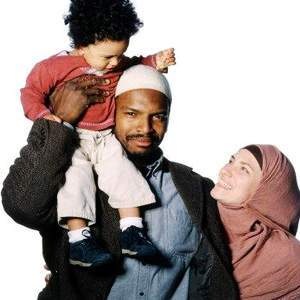
Happy Muslim Family
1. Make her feel secure and sakinah – don’t threaten her with divorce
2. Give sincere salaams
3. Treat her gently – like a fragile vessel
4. Advise in private, at the best time, in the best way and atmosphere
5. Be generous with her
6. Warm the seat for her, you will warm her heart
7. Avoid anger, keep wudu at all times
8. Look good and smell great for your wife
9. Don’t be rigid or harsh-hearted or you will be broken
10. Be a good listener
11. Yes for flattery, No for arguing
12. Call your wife with the best names, cute nicknames, names she loves to hear
13. Utilize pleasant surprises
14. Preserve and guard the tongue
15. Expect, accept, and overlook her shortcomings
16. Give sincere compliments
17. Encourage her to keep good relations with her family
18. Speak about topics that interest her
19. Express to her relatives, how wonderful she is
20. Give each other gifts
21. Get rid of routine, surprise her
22. Have a good opinion of each other
23. Have good manners, overlook small things, don’t nitpick
24. Add a drop of patience, increase drops during pregnancy, menses
25. Expect and respect her jealously
26. Be humble
27. Sacrifice your happiness for hers
28. Help at home and with housework
29. Help her love your relatives, but don’t try to force her
30. Let her know that she is the ideal wife for you
31. Remember your wife in dua
32. Leave the past for Allah subhanahu wa ta ala, don’t dwell on, dig into, or bring it up.
33. Don’t act as if you are doing her a favor by working or providing, Allah is the Provider, the husband is the
carrier of the sustenance to the family
34. Take shaytaan as your enemy, not your wife
35. Put food in your wife’s mouth
36. Treat your wife like she is the most precious pearl that you want to protect
37. Show her your smile
38. Don’t ignore the small things, deal with them before they become big
39. Avoid being harsh-hearted
40. Respect and show that you appreciate her thinking
41. Help her to find and build her inner strengths and skills
42. Respect that she might not be in mood for intimacy, stay within halal boundaries
43. Help her take care of the children
44. Give her gifts with your tongue, be an artist with your compliments
45. Sit down and eat meals together
46. Let her know that you will be traveling or returning from travel, give her sufficient notice
47. Don’t leave home in anger
48. Maintain the secrecy and privacy of the home
49. Encourage each other in ibaadat
50. Respect and fulfill her rights upon you
51. Live with her in kindness, goodness, fairness in good and bad times
52. Kiss your wife, foreplay, “Don’t jump on her like a bull”
53. Keep disputes between the two of you, don’t take it outside
54. Show care for her health and well-being
55. Remember you are not always right or perfect yourself
56. Share your happiness and sadness with her
57. Have mercy for her weaknesses
58. Be a firm support for her to lean on
59. Accept her as is, she is a package deal
60. Have a good intention for her